- Tokenized gold saw a 30% growth in market cap in Q1 2026, expanding by 5.5 times faster than physical gold — the fastest pace on record.
- Tokenized gold experienced its largest wallet growth in history, adding more than 44,500 new wallets and suggesting a surging holder base.
- Tokenized gold saw its biggest surge in DeFi adoption, with value deployed in DeFi jumping by 123% in Q1.
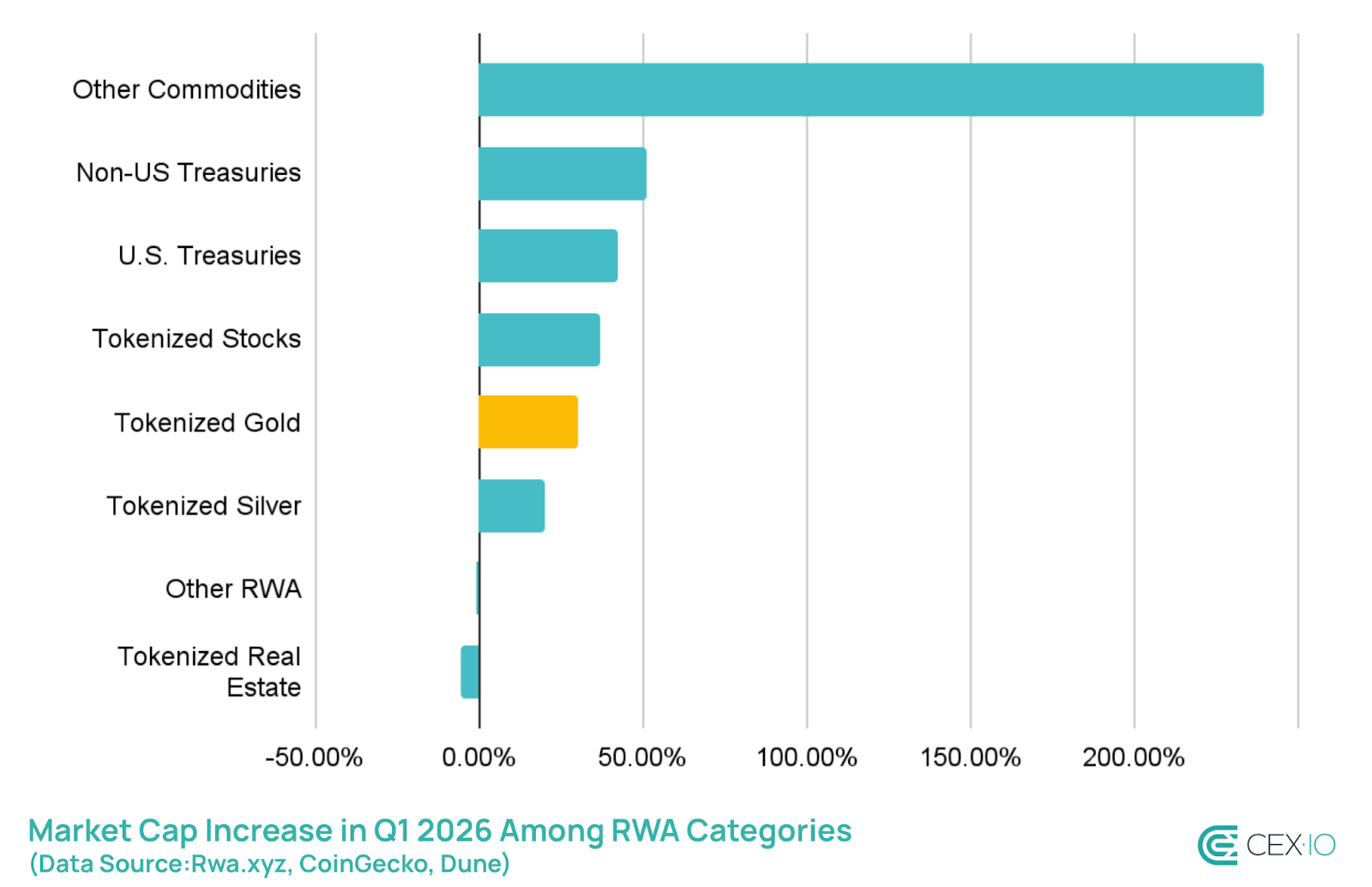
With the crypto market losing more than 20% in market cap, the first quarter of 2026 was rough for DeFi, which showed an 11% decline in TVL. However, RWA was one of the few sectors that went the other way, adding 30% in total value, partially offsetting the DeFi decline.
And within RWA, tokenized gold was one of the primary engines behind this growth.
Every Third RWA Investor Now Owns Tokenized Gold
Tokenized gold is the second-largest RWA category (behind tokenized treasuries), and it ended Q1 at $5.6 billion in market cap. Over the quarter, tokenized gold added $1.3 billion in new value, bringing its total growth to 30%. To put this into perspective, this single-quarter increase is nearly half of what the sector added during the entire 2025.
The same pattern can be seen in user growth.
Tokenized gold gained over 44,500 new wallets in Q1 alone, marking the largest increase in its history. In practical terms, this suggests that every fifth tokenized gold today entered the market within just these three months.
This rapid expansion pushed tokenized gold to a new milestone. Today, roughly one in three RWA participants holds tokenized gold, making it the most widely adopted real-world asset on-chain.
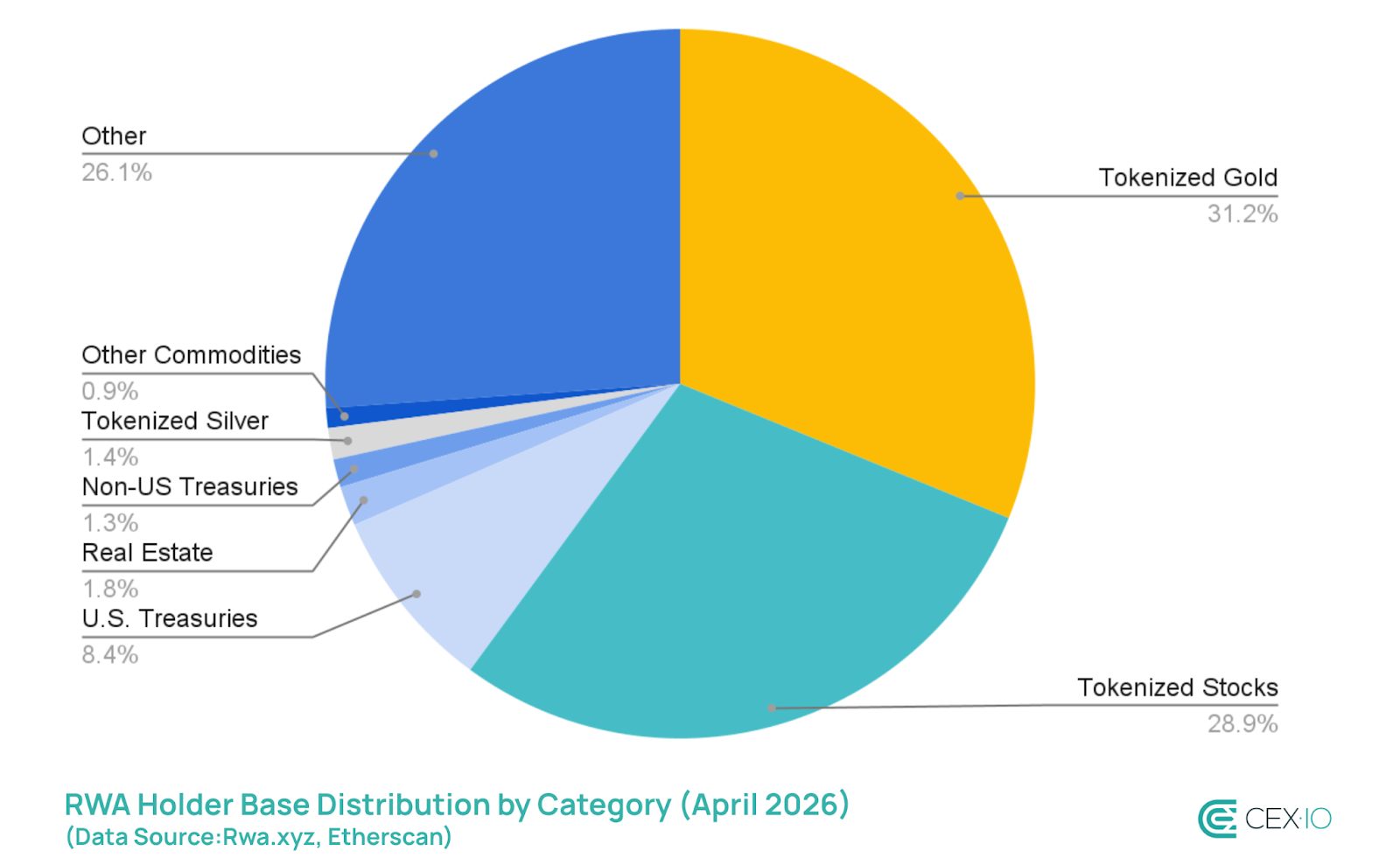
At the same time, the quarter was not short of new narratives. Tokenized stocks led in absolute user growth, adding nearly 80,000 new asset holding addresses. In turn, other commodities, including tokenized oil, metals, and agricultural assets, delivered the fastest relative gains. These segments attracted fresh attention and capital, which likely partly limited tokenized gold’s performance.
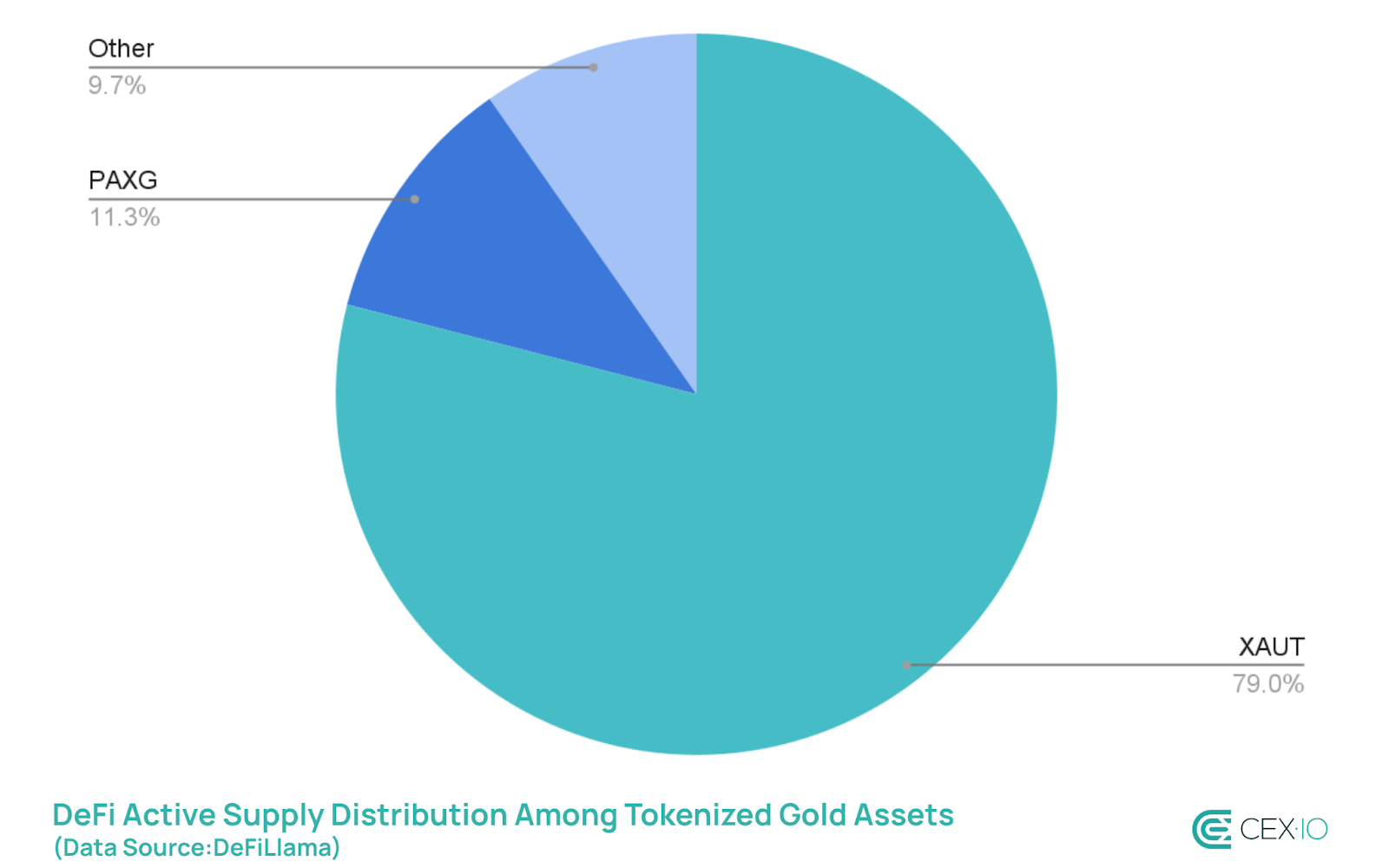
Another notable signal comes from how the asset is being used. The amount of tokenized gold actively deployed in DeFi jumped by 123% during the quarter, pushing total active value above $193 million. This is the biggest surge in DeFi adoption for tokenized gold ever, and it signifies that users are increasingly putting tokenized gold to work instead of perceiving it as a simple store of value.
Tokenized Gold Achieves Largest Outperformance Over Physical Gold on Record
To understand what tokenized gold’s Q1 2026 growth actually means, it helps to start with the broader gold market context. Q1 was a highly volatile period: on one hand, it recorded its best month in more than 25 years; on the other, it went through its worst weekly drop since 1983.
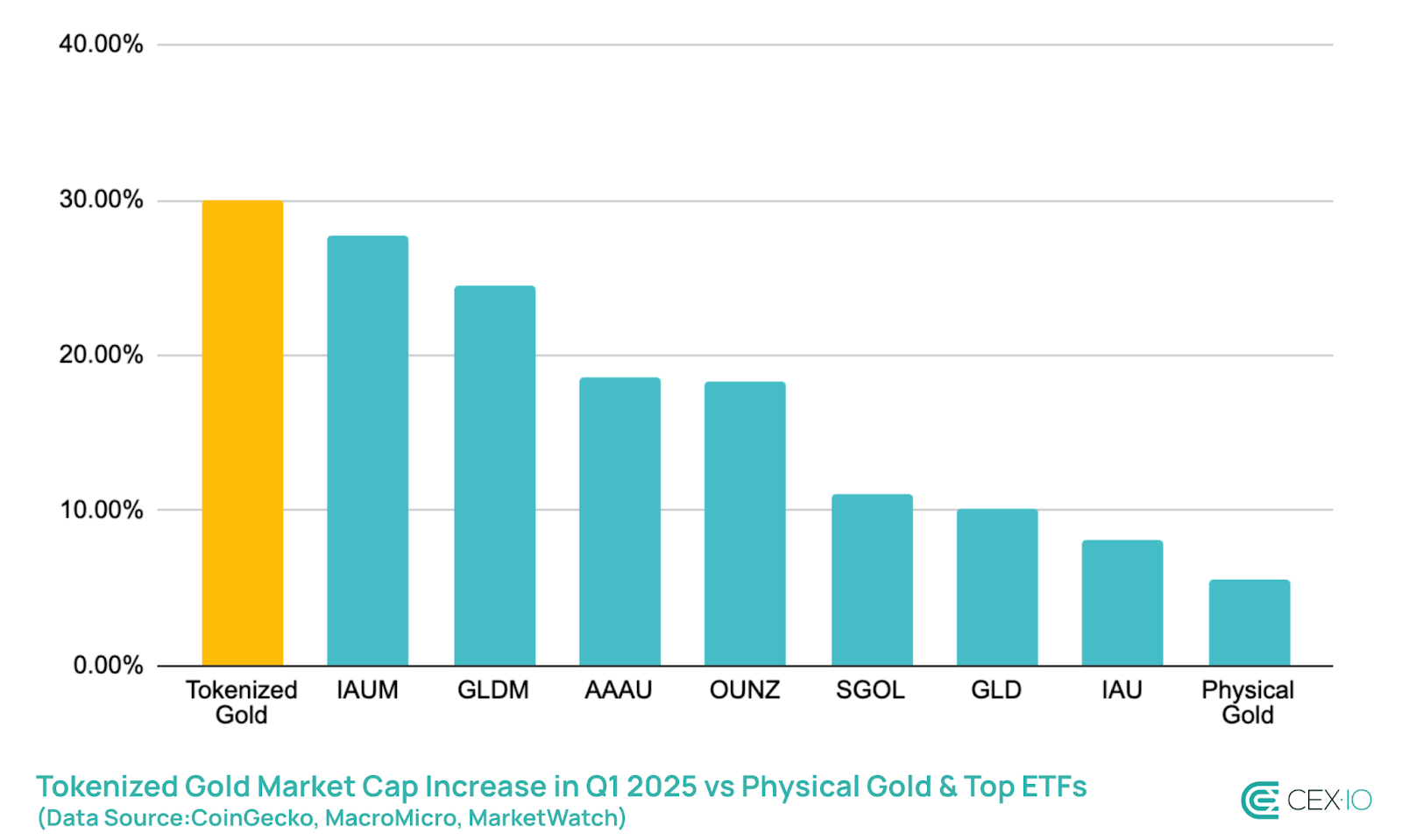
Despite this turbulence, physical gold still ended the quarter up 5.5%, pushing its total market value to $32.6 trillion. Major gold ETFs moved in the same direction, with SPDR Gold Shares (GLD) gaining around 10% and iShares Gold Trust (IAU) rising by 8% in holdings.
However, tokenized gold expanded by 30% over the same period, marking its largest quarterly outperformance versus physical gold on record. In relative terms, tokenized gold grew 5.5 times faster than the underlying asset — a gap that highlights how quickly on-chain gold exposure is scaling compared to traditional markets.
Overall, of all the major gold investment vehicles tokenized gold posted the strongest market cap growth in Q1. Also, if tokenized gold were an ETF, it would now rank as the fourth-largest one.
Tokenized Gold Trading Slows as It Enters Top Investment Vehicle Territory
Tokenized gold trading activity remains strong, but its growth is beginning to normalize as it reaches the scale of traditional markets. In Q1 2026, tokenized gold recorded $82 billion in trading volume, marking a 1,300% increase year-over-year — a pace roughly 20 times faster than what the largest gold ETFs posted over the same period.
At the same time, the growth gap is starting to narrow, with tokenized gold volume showing its slowest growth over the past year, falling behind several leading gold ETFs. As a result, tokenized gold slipped from the second-largest to the third-largest gold trading instrument by volume in Q1.
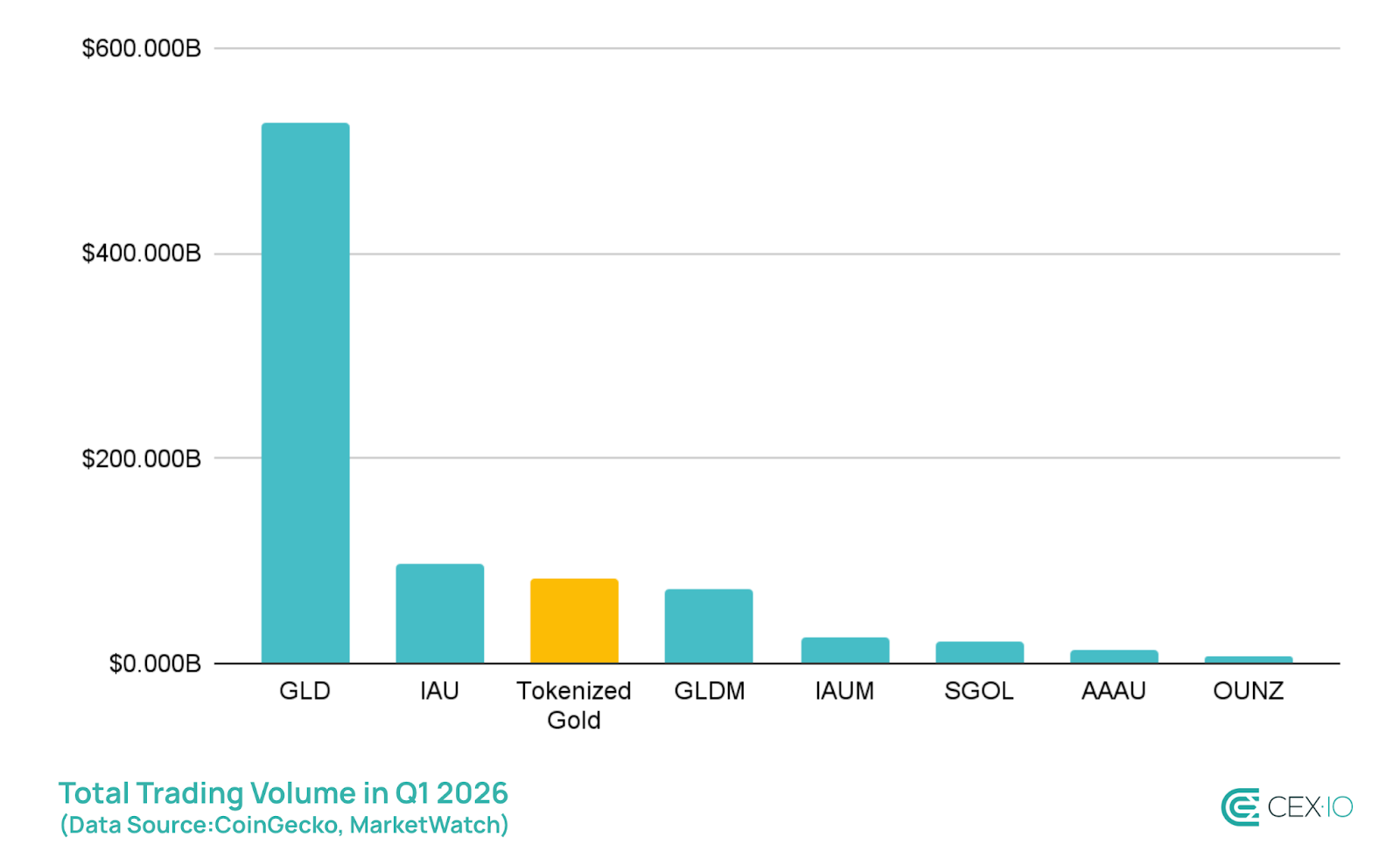
This doesn’t necessarily signal weakening demand. As tokenized gold reaches a scale comparable to the largest ETFs, maintaining explosive growth becomes more difficult. In turn, traditional instruments are seeing renewed activity, likely driven by the same macro volatility that supported gold prices overall.
PAXG Gains Ground in Market Cap, XAUT Outperforms in Wallet Growth
One of the major trends of 2025 was Tether Gold (XAUT) gaining share from Paxos Gold (PAXG) and smaller tokenized gold assets. In Q1 2026, the picture became more balanced.
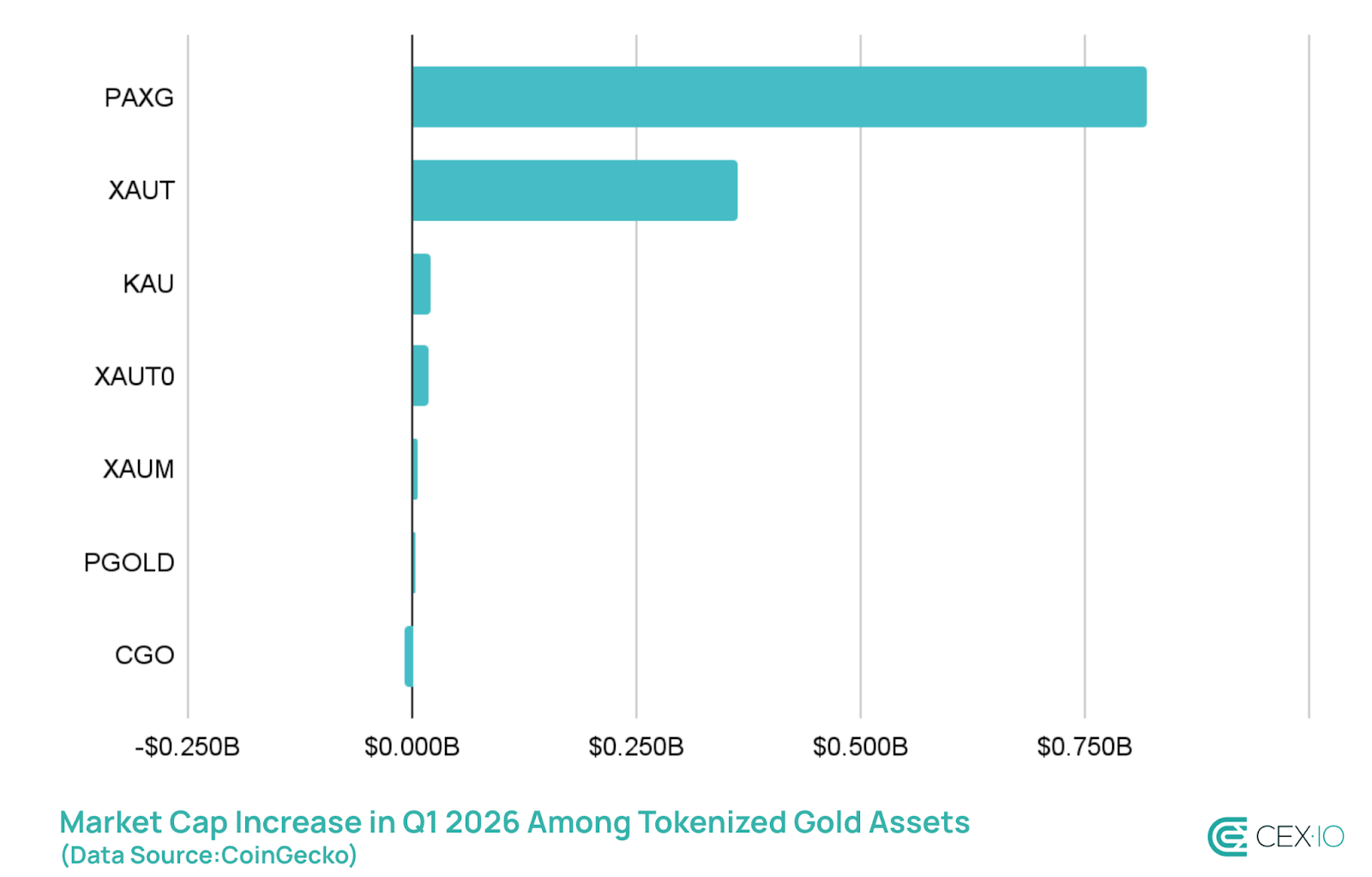
On market cap, PAXG had the stronger quarter by a wide margin. It posted a 51% increase, adding more than $800 million in value, while XAUT grew 16%. PAXG entered the year as the smaller of the two assets and closed Q1 just $200 million behind, down from a gap closer to $650 million. This means that PAXG outpaced XAUT in terms of attracting new capital in Q1 2026.
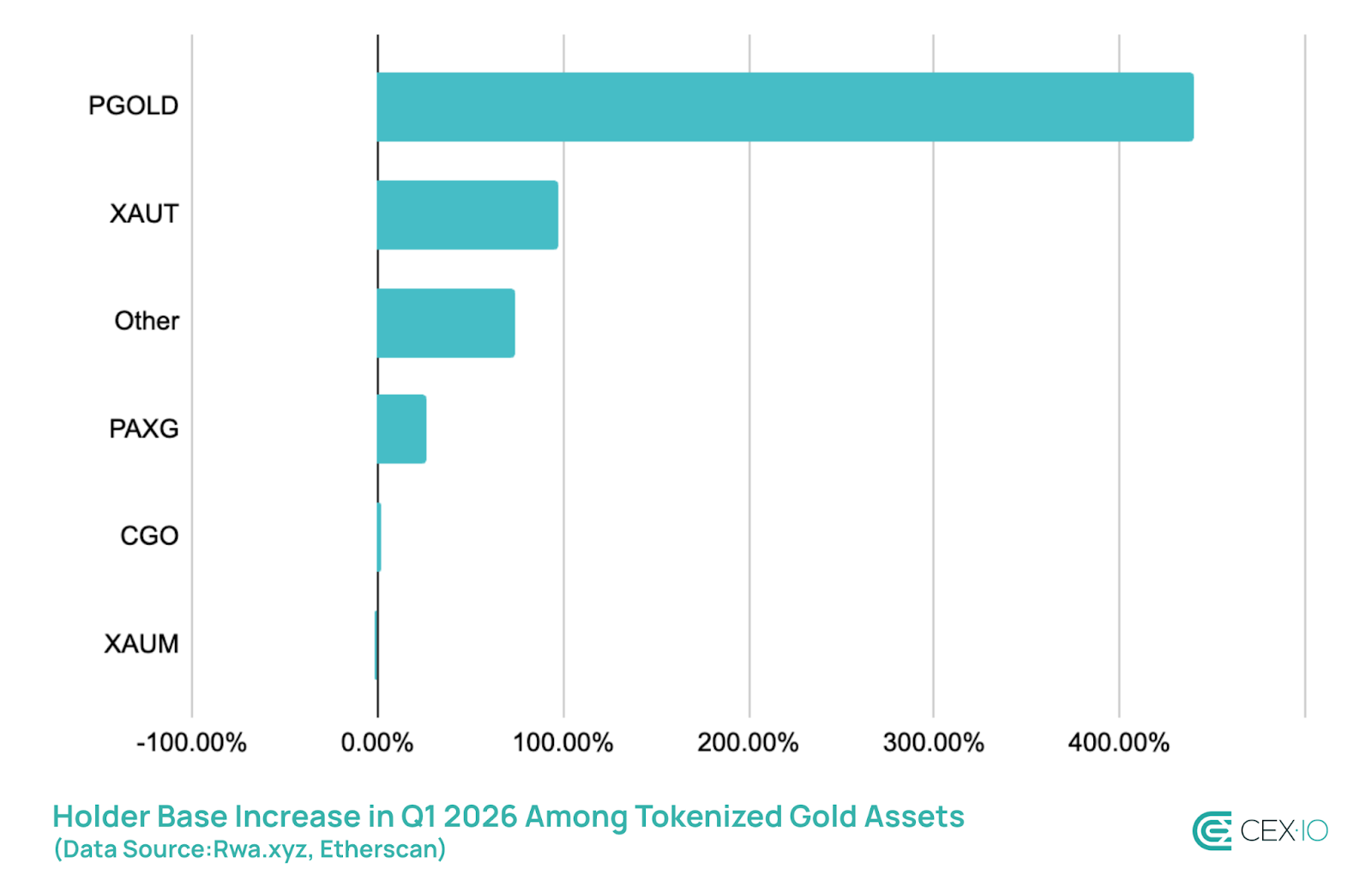
XAUT’s wins came elsewhere. Its number of wallets holding the asset nearly doubled in Q1, growing by close to 19,000 wallets. This means that for the first time since 2024 XAUT added more holders than PAXG in a single quarter. PAXG’s wallet base grew by 26%, broadly in line with the wider tokenized gold market.
The DeFi picture reinforces the same split. Virtually all of the growth in DeFi-deployed tokenized gold during Q1 came from XAUT, whose active value in protocols surged +127%, while PAXG’s pulled back slightly.
That divergence is becoming a defining feature of how these two assets function in the market. PAXG attracts capital that sits, with longer-duration holders accumulating a store of value. XAUT attracts capital that moves — deployed into protocols, actively traded, recycled. This duopoly resembles the stablecoin landscape where USDT and USDC are showing the growing divide in use cases.
Beyond the top two, the most notable development was Matrixdock Gold, whose DeFi-deployed value grew over 1,500% in the quarter — a sign of deepening protocol integration that could matter more as on-chain gold use cases expand.
Conclusion
Q1 2026 was a strong quarter for gold broadly — and tokenized gold outpaced the entire field. It grew faster than physical gold, faster than every major ETF, and remained one of the top gold investment vehicles in terms of trading volume. The market cap growth was more than just price appreciation and it came alongside one of the biggest increases in the holder base ever.
The next milestone will likely be closing the gap with GLD and IAU, the only two gold investment products still ahead by trading volume. Whether Q1’s convergence with GLD’s growth pace signals maturation or a temporary plateau will likely be the defining question of the quarters ahead.
The web content provided by CEX.IO is for educational purposes only. The information and tools provided neither are, nor should be construed as, an offer, or a solicitation of an offer, or a recommendation, to buy, sell or hold any digital asset or to open a particular account or engage in any specific investment strategy. Digital asset markets are highly volatile and can lead to loss of funds.
The availability of the products, features, and services on the CEX.IO platform is subject to jurisdictional limitations. To understand what products and services are available in your region, please see our list of supported countries and territories. This page includes additional links to information about individual products, and their accessibility.
#Bitcoin #Crypto #Trading #Blog #CEX.IO